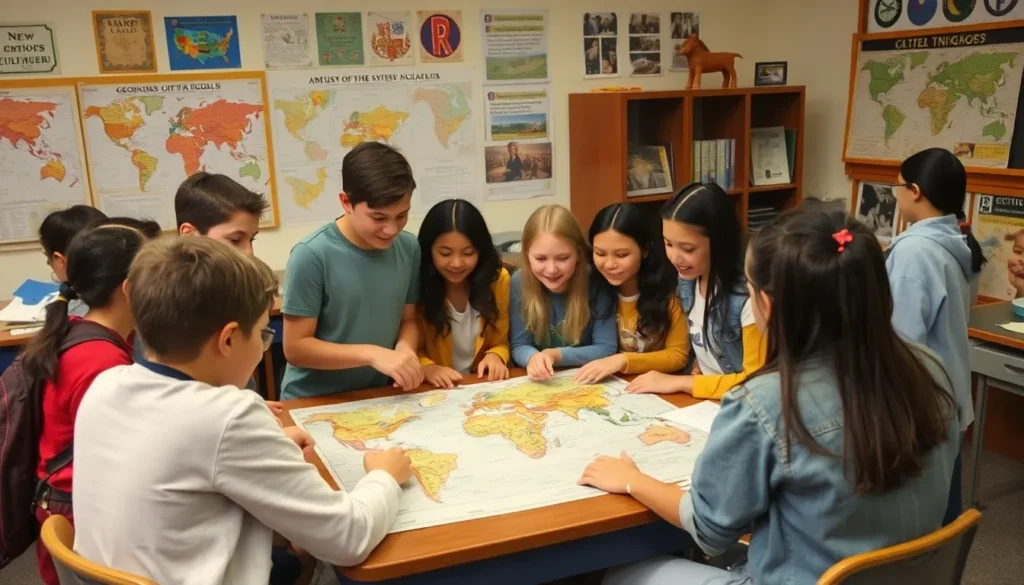
Social studies is like the ultimate backstage pass to understanding the world. It’s not just about memorizing dates and names; it’s the glue that connects history, geography, economics, and civics into one exciting package. Imagine diving into the stories of ancient civilizations while figuring out how they influence today’s pizza toppings—yes, that’s right, the Romans loved their toppings too!
In school, social studies equips students with the tools to navigate a complex society. It sparks curiosity about cultures and global issues, making it essential for shaping informed citizens. So, if you think social studies is just another boring class, think again! It’s the key to unlocking a treasure trove of knowledge that makes the world a more interesting place.
What Is Social Studies in School
Social studies encompasses a broad curriculum that includes history, geography, economics, and civics. This subject encourages students to understand the complex relationships between past events and current global dynamics. Emphasis on critical thinking enables students to analyze various factors that shape societies.
History provides context about human experiences and the development of different cultures. Students explore significant events and figures, gaining insights into how these elements influence contemporary society. Geography examines physical landscapes and human interactions, teaching the impact of location on culture and economic activities.
Economics introduces students to fundamental concepts such as supply and demand, trade, and economic systems. Understanding these principles equips students to navigate real-world financial situations. Civics educates about government structures, rights, and responsibilities, fostering active citizenship and community involvement.
Social studies also promotes cultural appreciation. By investigating diverse cultures, students develop empathy and curiosity towards others. This exploration helps them recognize similarities and differences among their peers. Additionally, the curriculum focuses on global issues, encouraging students to think critically about challenges like climate change, poverty, and inequality.
Integrating various disciplines within social studies prepares students for informed decision-making. Engagement with historical documents, maps, and economic data cultivates a well-rounded understanding of both local and global contexts. This foundational knowledge is essential for developing engaged citizens who can contribute positively to society.
Importance of Social Studies Education
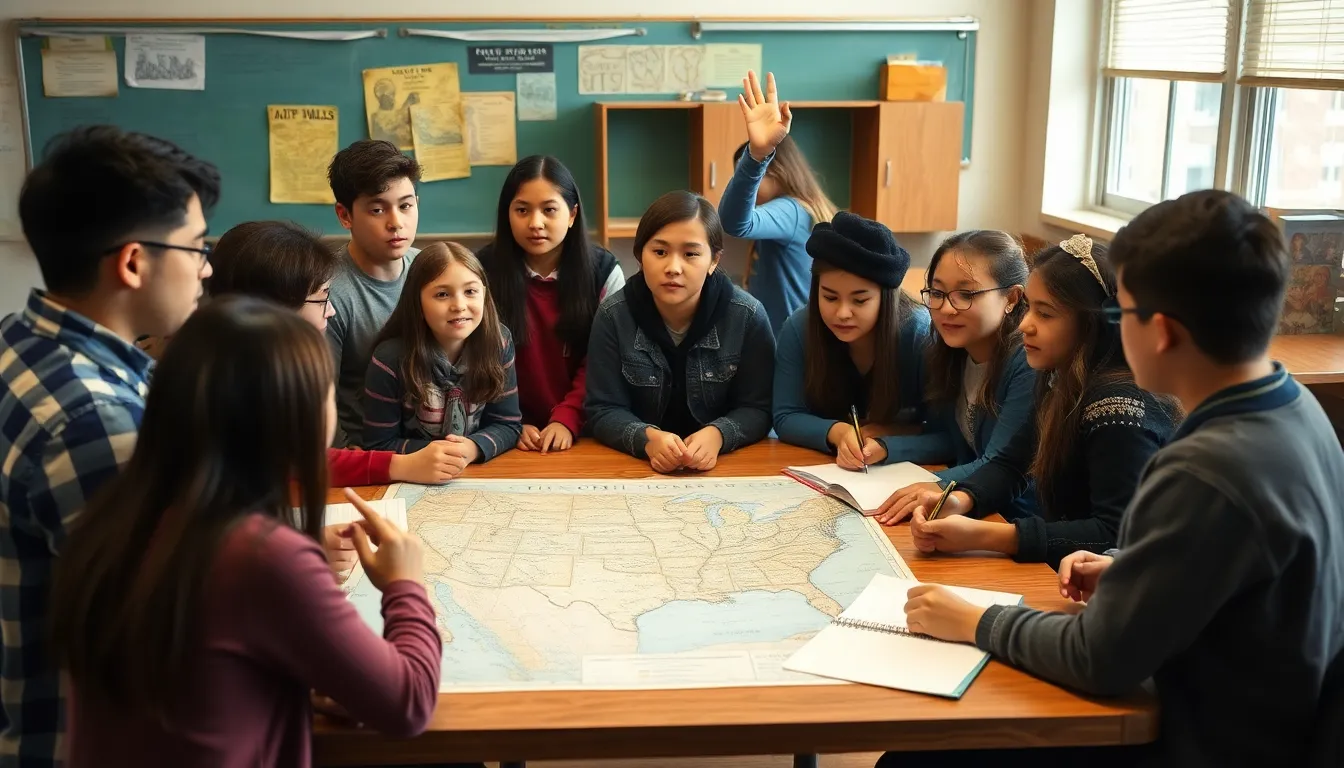
Social studies education plays a vital role in developing engaged and informed citizens. This subject encompasses critical areas of knowledge necessary for understanding one’s role in society.
Understanding Citizenship
Citizenship education prepares students to participate actively in their communities. It involves learning about government systems, rights, and responsibilities. Students explore the historical context of civic engagement, which shapes their understanding of democracy. Understanding civic duties fosters a sense of belonging and encourages active participation in democratic processes. Students analyze landmark events and legislation that influenced individual rights and freedoms. This analysis cultivates a responsible citizenry prepared to contribute positively.
Fostering Critical Thinking
Critical thinking skills are fundamental to social studies education. Through the examination of historical events and current issues, students learn to assess information critically. They identify biases, recognize varying perspectives, and form well-rounded viewpoints on complex topics. Engaging with case studies challenges students to develop arguments supported by evidence. This process enhances analytical skills essential for problem-solving. Moreover, evaluating diverse sources encourages students to distinguish between fact and opinion. Ultimately, fostering these skills equips students to navigate an increasingly complex world.
Core Components of Social Studies
Social studies includes several core components essential for understanding society. Each component contributes uniquely to developing critical thinking and informed citizenship.
History
History teaches students about past events, helping them comprehend the evolution of societies. It covers significant milestones, exploring how these events shape contemporary life. Key concepts include the rise and fall of empires and the development of human rights. Additionally, students can analyze cause-and-effect relationships that led to major societal changes. Understanding historical contexts equips learners with the ability to engage in thoughtful discussions about the present and future.
Geography
Geography provides insights into the relationship between people and their environments. It explores physical landscapes, climates, and natural resources, demonstrating how these factors influence cultures and economies. Learning about maps and spatial relationships helps students visualize global interconnections. Various geographical themes include urbanization, migration patterns, and resource management. A strong foundation in geography fosters awareness of global challenges, such as climate change and urban planning.
Economics
Economics introduces students to the principles that govern resource allocation and financial systems. Supply and demand dynamics form a cornerstone of this component. Concepts such as trade, market structures, and economic policies help students navigate real-world financial decisions. Engaging with economic case studies enables learners to apply theory to practical scenarios. Understanding economics cultivates the ability to analyze financial trends and make informed choices in their future careers.
Civics
Civics education focuses on the structure of government and individual rights and responsibilities. It encompasses an understanding of democratic systems, law-making processes, and civic engagement. Exploring landmark legislation and historical movements reveals how advocacy shapes society. Students learn the value of participating actively in their communities through voting and public service. A strong civics foundation prepares individuals to contribute positively to democratic processes and global citizenship.
Teaching Methods in Social Studies
Teaching methods in social studies engage students through various interactive approaches that foster understanding and critical thinking skills.
Project-Based Learning
Project-based learning immerses students in real-world challenges, allowing them to explore cultural or historical themes in depth. By completing projects, students research significant events or issues, developing both analytical and collaborative skills. For example, a project might involve creating a presentation on environmental sustainability, where students investigate local practices and propose solutions. This method encourages hands-on experiences, making concepts more relatable while enhancing students’ problem-solving abilities. Continuous reflection on their learning process ensures they understand the implications of their work in a broader social context.
Collaborative Activities
Collaborative activities stimulate student interaction and promote teamwork. Working in groups, students discuss diverse perspectives on various social issues, such as civic engagement or cultural diversity. Group discussions can involve analyzing current events, encouraging students to share insights and question assumptions. Students benefit from peer feedback, which fosters a deeper understanding of complex topics. Furthermore, collaborative activities such as debates or role-playing simulations allow students to explore different viewpoints, helping them appreciate multiple sides of an issue. This method not only builds communication skills but also prepares students for active participation in their communities.
Social studies plays a pivotal role in shaping informed and engaged citizens. By integrating history, geography, economics, and civics, it equips students with critical thinking skills essential for understanding complex societal issues. This multifaceted approach not only fosters cultural appreciation but also encourages active participation in democratic processes.
Through interactive teaching methods like project-based learning and collaborative activities, students gain hands-on experience that deepens their understanding of local and global challenges. As they explore diverse perspectives and engage in meaningful discussions, they develop the empathy and awareness needed to navigate an increasingly interconnected world. Ultimately, social studies education lays the foundation for responsible citizenship and encourages students to contribute positively to their communities.